British Shorthairs: Easygoing Teddy Bears

British Shorthairs Easygoing Teddy Bears Pets advice
Imagine a cat that embodies quiet dignity and plush comfort, a living teddy bear content to simply share your space with a serene presence. That’s the British Shorthair in a nutshell. These charming felines, with their dense coats, round faces, and sturdy builds, are renowned for their incredibly easygoing and stable temperaments, making them beloved companions in households across the globe. They possess an endearing, almost stoic quality, preferring calm observation over frantic activity.

A Glimpse into Their Past

The story of the British Shorthair is intertwined with the history of Britain itself. Their ancestors are thought to have arrived with the Romans, tasked with keeping rodent populations in check within camps and settlements. These practical, hardy cats adapted over centuries to the British climate, developing their signature dense fur and robust physique. While they served utilitarian purposes for ages, the late 19th century saw the beginning of dedicated breeding programs. Harrison Weir, often called the “Father of the Cat Fancy,” was instrumental in championing native British breeds, including the Shorthair, showcasing them at the Crystal Palace cat show in 1871. Though their numbers dwindled during the World Wars, dedicated breeders worked tirelessly to preserve and refine the breed, leading to the wonderful companions we know today.

The Look: Chunky Charm and Plush Coats

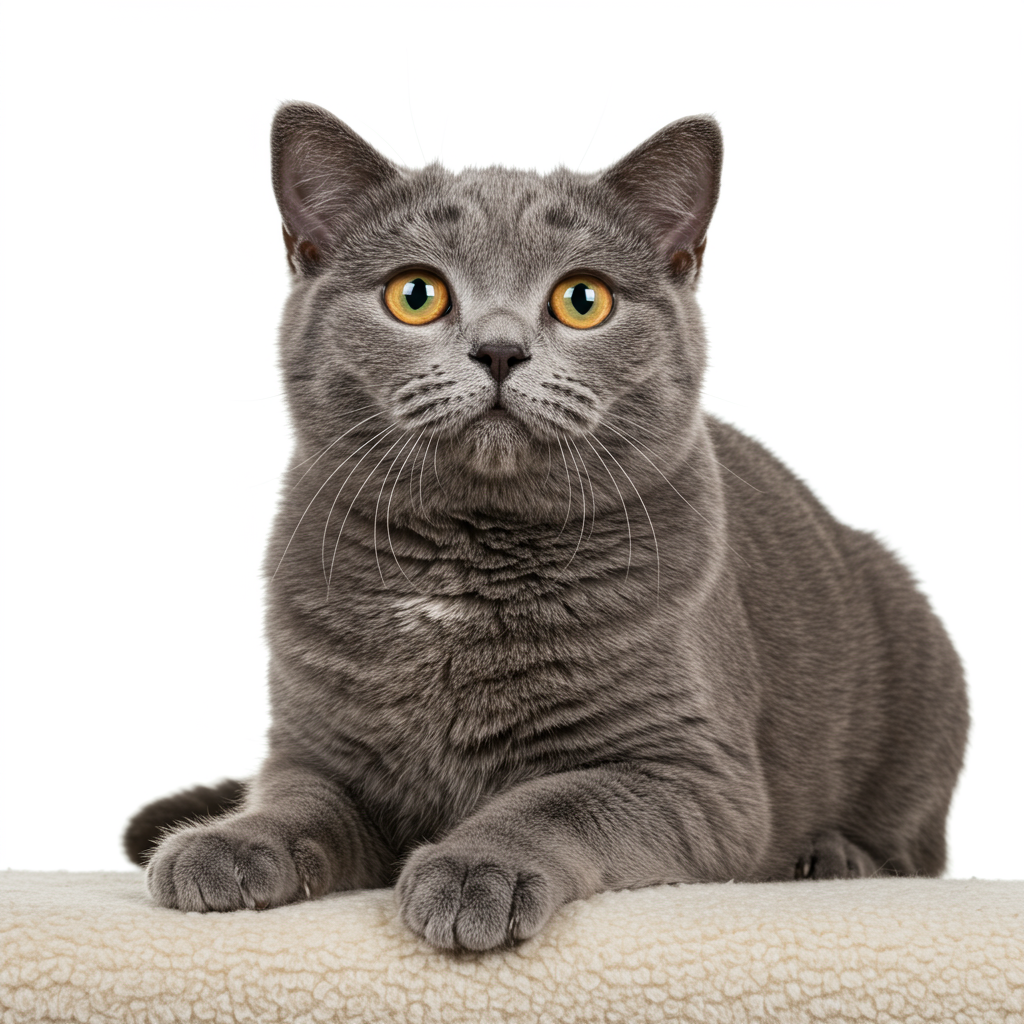
You can often spot a British Shorthair by its distinctive appearance. They are medium to large cats, well-muscled and heavy-boned, giving them a noticeably solid feel – often described as ‘cobby’. Everything about them seems rounded: their broad chests, strong legs, blunt tails, and most notably, their large, round heads set on short, thick necks. Their cheeks are particularly full, especially in mature males, contributing significantly to that endearing ‘teddy bear’ look. Large, round eyes, typically a striking copper or deep gold (though eye color varies with coat color), gaze out with a calm, intelligent expression. Of course, their coat is a defining feature. It’s short, incredibly dense, and feels crisp or plush to the touch, standing away from the body rather than lying flat. While the British Blue – a solid, even grey-blue coat with copper eyes – is the most iconic and widely recognized variety, British Shorthairs actually come in a vast array of colors and patterns. You’ll find them in solids (white, black, cream, red), torties, tabbies (classic, mackerel, spotted), colourpoints, bi-colours, and more. Regardless of the color, the coat’s texture remains uniquely dense and requires relatively straightforward grooming.

That Famous Temperament: Calm, Cool, Collected

If you’re looking for a feline friend who epitomizes tranquility, the British Shorthair is an excellent choice. They are famously unflappable and placid. Unlike more demanding or hyperactive breeds, they tend to take life in stride. They enjoy affection and companionship but are typically not ‘in-your-face’ cats. They’re more likely to sit near you on the sofa than demand to be the constant center of attention on your lap, although many enjoy a gentle cuddle on their own terms. Their independence is a key part of their charm. They tolerate being left alone reasonably well, making them suitable for individuals or families with busy schedules, provided their needs for interaction and stimulation are met when people are home. They are generally quiet cats, not known for excessive meowing, preferring to communicate subtly or with a gentle chirp. This calm nature extends to their interactions with others. British Shorthairs are often remarkably tolerant of children, provided the children are taught to interact respectfully. Their patience and sturdy build mean they are less likely to become easily agitated. They also tend to get along well with other pets, including dogs and other cats, especially if introduced properly and given time to adjust. They aren’t typically aggressive or overly territorial.
Be vigilant about your British Shorthair’s diet and activity levels. Their naturally sturdy build and relaxed nature mean they can easily become overweight if overfed or under-exercised. Excess weight can lead to serious health issues later in life, including joint problems and diabetes. Always provide high-quality food in measured portions and encourage daily play sessions.

Caring for Your Easygoing Companion

Despite their luxurious coats, British Shorthairs are surprisingly low-maintenance in the grooming department. That dense fur doesn’t tangle or mat easily. A good brush once or twice a week is usually sufficient to remove loose hair and keep their coat in prime condition. You might want to brush more frequently during seasonal shedding periods (spring and autumn) to minimize hair around the house and prevent hairballs. Diet is crucial, as highlighted earlier. These cats love their food and aren’t naturally inclined towards high levels of activity. It’s vital to feed a balanced, high-quality diet appropriate for their age and activity level, paying close attention to portion control to prevent obesity. Fresh water should always be available. While not overly athletic, they do need some exercise to stay physically and mentally healthy. Engage them with interactive toys like feather wands, laser pointers (used responsibly, always ending the session by landing the dot on a physical toy they can ‘catch’), or puzzle feeders. Even short, regular play sessions can make a big difference. They appreciate having scratching posts available to satisfy their natural scratching instincts and help maintain their claws. Health-wise, British Shorthairs are generally robust. However, like all breeds, they can be predisposed to certain conditions. Hypertrophic cardiomyopathy (HCM), a heart condition, is known to occur in the breed, so responsible breeders screen their breeding cats. Polycystic kidney disease (PKD) was once more prevalent but has been significantly reduced through genetic testing. Regular veterinary check-ups are essential for catching any potential issues early.

Living the British Shorthair Life

Sharing your home with a British Shorthair is often a peaceful experience. They tend to find comfortable spots – a plush chair, a sunny windowsill, the foot of your bed – and observe the household goings-on with quiet contentment. They’ll greet you with a gentle head-butt or a quiet purr, follow you calmly from room to room, or simply enjoy being in the same space as their humans. They aren’t destructive cats by nature, especially if provided with appropriate outlets like scratching posts and engaging toys. Their intelligence means they can learn routines and even simple tricks, though their motivation might lean more towards a tasty treat than inherent showmanship! They are creatures of habit and appreciate a stable environment. Ultimately, the British Shorthair offers a unique blend of gentle affection, quiet independence, and teddy-bear charm. They are adaptable, low-drama companions perfectly suited for those who appreciate a calm, loving presence without constant demands. Their sturdy health, easy grooming, and tolerant nature make them a wonderful choice for first-time cat owners, families, seniors, and anyone seeking a serene feline friend to share their lives with. They truly are the easygoing teddy bears of the cat world.
Amelia Reed, Veterinarian and Animal Behaviorist

Dr. Amelia Reed is an accomplished Veterinarian and Animal Behaviorist with over 18 years of experience dedicated to enhancing the lives of pets and strengthening the bond with their human companions. She specializes in preventative care, positive reinforcement training, and animal nutrition, focusing on creating enriched environments and tailored approaches to well-being for a wide variety of species. Throughout her career, Dr. Reed has worked in clinical practice, participated in animal rescue operations, and conducted research on pet welfare, earning a reputation for her compassionate and evidence-based methods. She is known for her holistic perspective on pet care, emphasizing that understanding a pet's unique needs, natural instincts, and emotional state is key to their happiness and health. Dr. Reed holds a Doctor of Veterinary Medicine (DVM) degree and combines her extensive medical knowledge with a profound love for all creatures. She continues to contribute to the pet community through educational workshops, online resources, and advocating for responsible pet ownership and animal advocacy.

Rate author
PetsExperience
Add a comment